
Industries
Credit card processing for food trucks and mobile vendors
8 min read
Quick answer
Food trucks need a mobile card reader that works over cellular data, since wifi is unreliable on the road. Most trucks pay flat-rate pricing around 2.6%–3.5% per tap, use a phone or tablet-based POS, and should turn on offline mode so a dead zone at a festival never means a lost sale.
Key takeaways
- Cellular data, not wifi, is what actually keeps a food truck's card reader online.
- Offline mode lets you keep selling in dead zones; transactions process once signal returns.
- Flat-rate pricing is usually simpler for trucks than interchange-plus, given lower average tickets.
- A battery-powered reader and a phone mount matter as much as the processing rate.
- Festivals and events often add their own vendor fees, confirm those before setting menu prices.
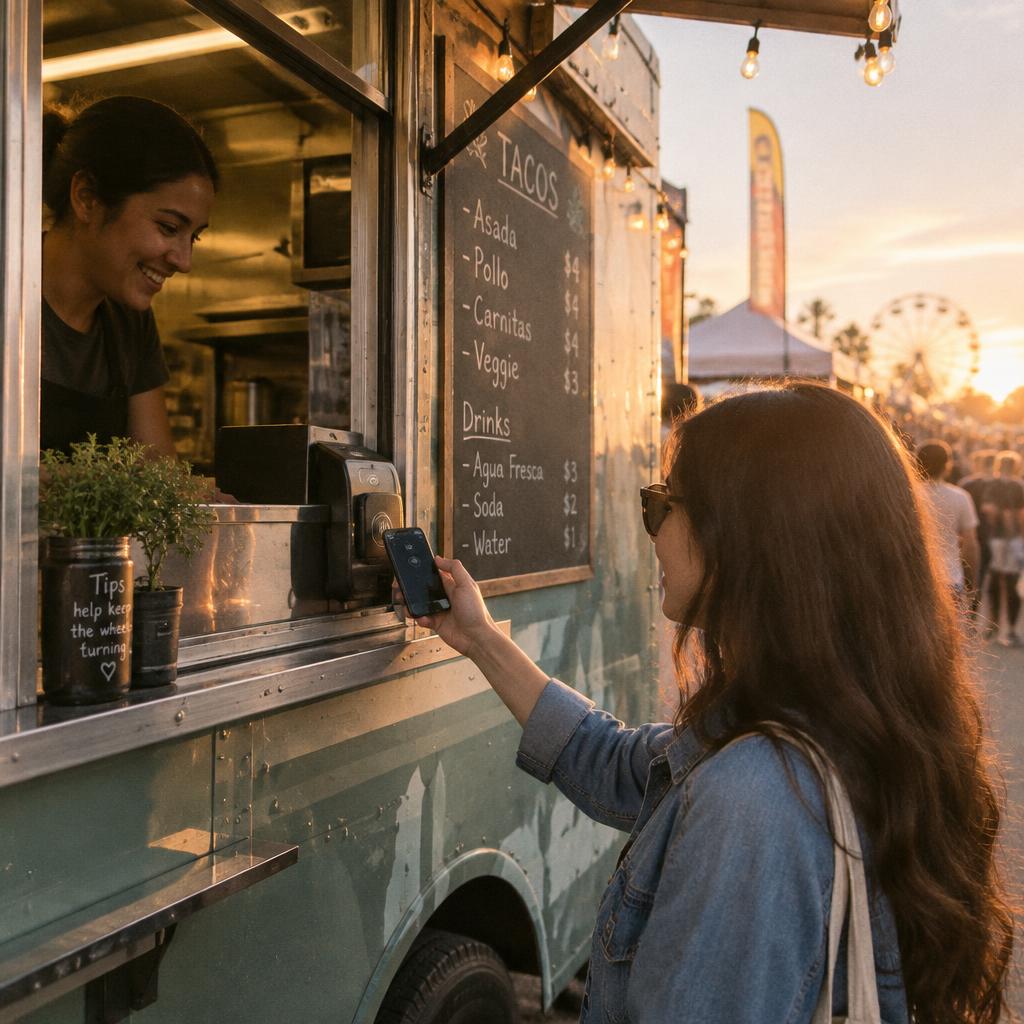
Food trucks live and die by the lunch rush, and nothing kills a line faster than a card reader that won't connect. Unlike a shop with a fixed internet line, a truck moves every day, a downtown skyway one day, a brewery parking lot the next, a county fair the weekend after. Your payment setup has to work anywhere you park, on cell signal alone, and survive being bumped around in a service window all summer. This guide covers what actually matters for mobile vendors: the hardware, the pricing that fits low average tickets, and how to keep selling when signal drops.
If you're setting up a truck for the first time, it also helps to read our general guide on how to accept credit card payments alongside this one, the fee mechanics are the same, it's the mobility that changes the equipment choices.
What kind of card reader works best on a food truck?
You want a reader built for mobility, not a countertop terminal that expects a phone jack or hardwired internet. The three realistic options are a smartphone-attached reader, a standalone handheld terminal with its own cellular data, or a compact all-in-one with a built-in screen for tipping and receipts.
- Phone or tablet reader, plugs into or pairs with your phone; cheapest option, relies on your phone's cell signal.
- Standalone cellular terminal, has its own SIM and data plan, so it doesn't compete with your phone for signal; better for busy trucks.
- All-in-one smart terminal, built-in screen, receipt printer, and battery; best for trucks doing high volume at festivals.
- Battery life matters more than people expect, a reader that dies at hour six of an eight-hour festival is a real problem.
Whatever you choose, buy the hardware outright rather than signing a lease. A leased terminal locked into a 48-month term follows you even if you sell the truck. Our credit card machine guide breaks down fair pricing for the equipment itself.
How do you take payments without reliable wifi?
Almost no food truck should rely on wifi as its primary connection. Event wifi is often overloaded by hundreds of phones at once, and a truck parked on a random street corner may not have wifi at all. The fix is a reader or POS system that runs on cellular data, either through your phone's plan or its own built-in SIM.
Even with good cell coverage, you'll hit dead zones, a fairgrounds with weak towers, a basement-level festival, a rural county fair. That's where offline mode matters: your reader stores the transaction locally, gives the customer an approval on the spot, and processes the actual charge once signal returns, usually within minutes. Ask any provider directly whether offline mode is included or an add-on before you sign up.
What should a food truck expect to pay in fees?
Food truck tickets tend to be small, often $8 to $25, and high in volume during a rush. That combination usually favors flat-rate pricing over interchange-plus, because a flat rate is predictable and the per-transaction cents matter more than they would on a $200 sale. Most mobile vendors land somewhere around 2.6% to 3.5% per tapped or dipped card, sometimes with a small flat fee per transaction as well.
| Business type | Average ticket | Common pricing model | Typical range |
|---|---|---|---|
| Food truck / mobile vendor | $8–$25 | Flat rate | 2.6%–3.5% |
| Sit-down restaurant | $25–$60 | Interchange-plus or flat rate | 2.3%–3.2% |
| Retail shop | $30–$80 | Interchange-plus | 2.2%–3.0% |
As your truck grows and monthly volume climbs past roughly $10,000–$15,000, it's worth comparing that flat rate against interchange-plus pricing, the math tips the other way once you're doing steady volume. Our breakdown of interchange-plus vs. flat rate pricing walks through exactly when that crossover happens, and our credit card processing fees explained guide covers the underlying math either way.
How fast does the money show up?
Most providers deposit the next business day if you batch out before your daily cutoff, which matters at the end of a long festival day when you're exhausted and just want to close up. Set your terminal to auto-batch so nobody has to remember. Weekend festival sales, which is most of a food truck's business, typically land the following Monday or Tuesday since banks don't settle over the weekend. Our guide to next-day funding explains the mechanics if a deposit looks delayed.
Do you need a full POS system or just a reader?
A simple reader paired with your phone works fine for a small truck with a short menu. Once you're running a rotating specials board, tracking inventory across two trucks, or need employee clock-in, a proper mobile POS pays for itself in fewer mistakes and better end-of-day reporting. Compare the tradeoffs in our best POS system for small business guide and how much a POS system actually costs.
- Simple reader only: works for one-menu trucks with a small team and cash-register-style operations.
- Mobile POS with tablet: better for trucks juggling modifiers, combos, and multiple staff on tickets.
- Add a kitchen display or printer once you're running two service windows at once.
Cash, tips, and card-not-present orders
Even trucks that go mostly cardless still see occasional cash, and tipping prompts on the reader screen have become the norm, most vendors see a real bump in tip percentage just by having the screen turn toward the customer. If you also take preorders through a website or an app for catering and events, those are card-not-present transactions and carry a slightly higher rate than a tap in person; our online payment processing guide covers setting that up cleanly alongside your truck's in-person reader.
What about chargebacks on a food truck?
Chargebacks are rare for food trucks compared to online sellers, since the customer is standing right there, but they still happen, a duplicate charge from a spotty connection, or a customer disputing a charge after the fact. Keep your terminal receipts, and if you take preorders for catering, get a signed order or confirmed email in case a dispute comes in later. Our how to prevent chargebacks guide has the specifics.
What does this look like for Minnesota food trucks?
Minnesota's food truck season runs hard from May through October, with the Twin Cities calendar packed, Nicollet Mall food truck days, Grand Old Day in St. Paul, Music in the Park series, brewery lots, and the Minnesota State Fair, one of the largest fairgrounds events in the country for vendors. Trucks working Minneapolis events deal with dense city blocks where cell signal is usually solid, while trucks working county fairs and lake towns across Minnesota need to plan for weaker rural coverage.
We work with mobile vendors across the Twin Cities and set up hardware that survives a full fair weekend, plus offline mode configured before opening day rather than discovered mid-shift. If you're working St. Paul events or state fair season this year, book a setup call and we'll walk through equipment and coverage together before your first weekend.
Common mistakes new food truck owners make
- Relying on event wifi instead of a cellular-based reader.
- Leasing a terminal on a multi-year contract that outlives the truck.
- Not testing signal at a new event location ahead of time.
- Skipping offline mode and losing sales during a dead zone.
- Forgetting that a card reader still needs to be PCI compliant, see our PCI compliance guide.
Getting this right before opening day means one less thing to worry about at a festival with a line thirty deep. If you want a second opinion on your setup or current rates, book a free consultation or call 763-280-3155, or browse more guides on our blog.
Frequently asked questions
Sources and references
Want this checked against your own statement?
Send us a recent processing statement and we'll mark it up line by line, what you're paying now, and what you'd pay with us. No pressure.